- Departments
- Minerva Fast Track & ERC Research Group for Marine Transmissible Cancers
- News
- Zoe Chervontseva awarded Max Planck–Weizmann Postdoctoral Fellowship to investigate RNA regulation in transmissible cancers
Zoe Chervontseva awarded Max Planck–Weizmann Postdoctoral Fellowship to investigate RNA regulation in transmissible cancers
We are delighted to announce that Dr. Zoe Chervontseva has been awarded a prestigious Max Planck Society (MPG)–Weizmann Institute of Science (WIS) Postdoctoral Fellowship to investigate RNA biology in marine transmissible cancers over the next four years. Her project will be jointly supervised by Dr. Alicia L. Bruzos, leader of the Marine Transmissible Cancers Research Group at the Max Planck Institute for Marine Microbiology, and Prof. Igor Ulitsky at the Weizmann Institute of Science in Israel.
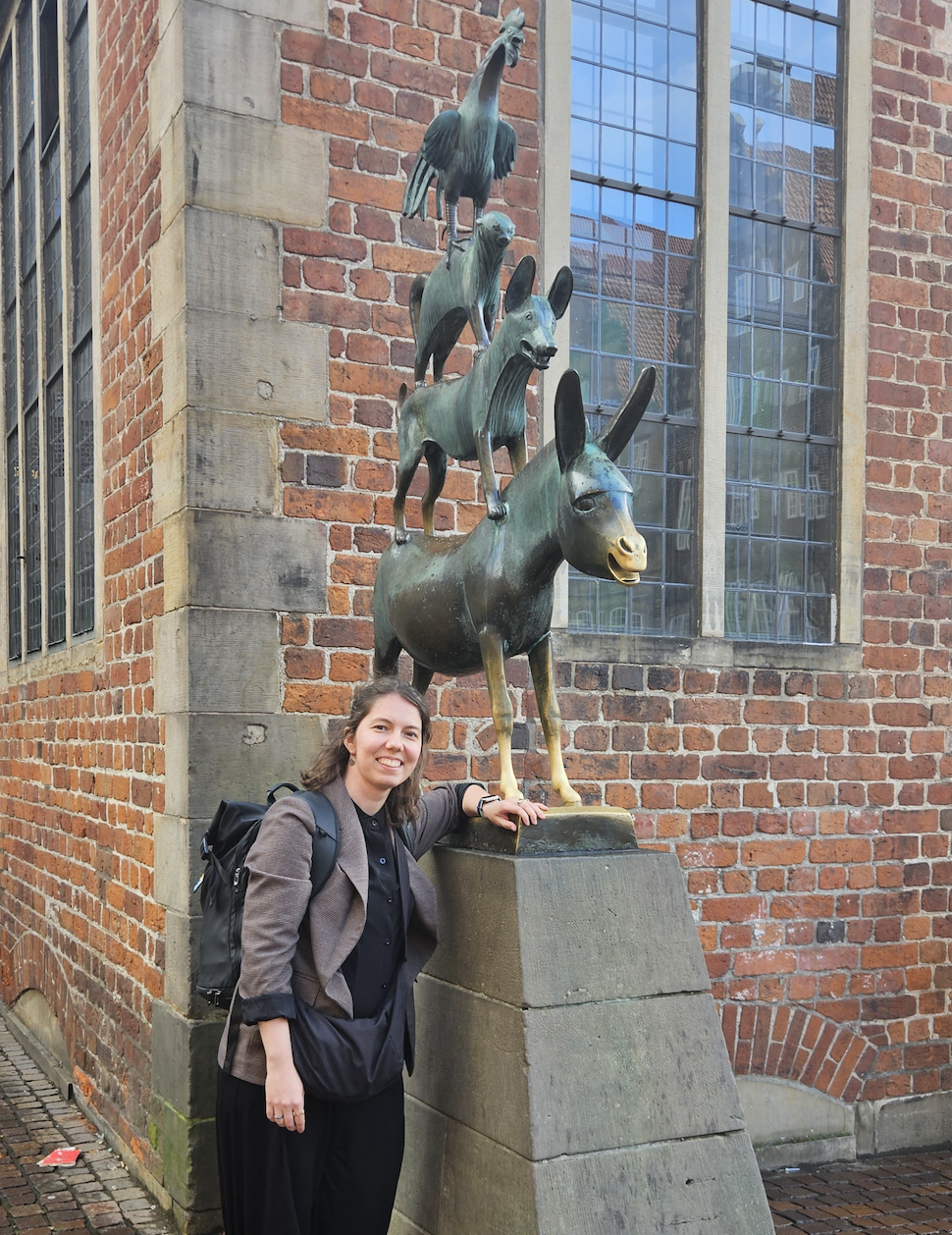
Zoe is a computational biologist specializing in bioinformatics, machine learning, and evolutionary genomics. She studied Bioengineering and Bioinformatics at Lomonosov Moscow State University and obtained her PhD in Bioinformatics, focusing on RNA biology and gene expression in bacteria and cephalopods. She is currently a postdoctoral researcher at the University of Hamburg, where she investigates age-related alternative splicing across vertebrate species and tissues.
Her new research project will explore RNA regulation in bivalve transmissible cancers, combining computational and comparative transcriptomic approaches to investigate how changes in RNA processing and gene expression may contribute to the evolution and persistence of contagious cancer lineages. This collaboration brings together complementary expertise in marine cancer evolution and RNA biology.
On 8 October 2026, Zoe visited the Max Planck Institute for Marine Microbiology in Bremen and presented a seminar entitled "Rewriting the message: RNA regulation in cephalopods, aging vertebrates, and bacteria." Her talk explored how different organisms regulate gene expression after transcription, highlighting RNA editing in cephalopods, alternative splicing during vertebrate aging, and translational regulation in bacteria.
We congratulate Zoe on this achievement and look forward to welcoming her to this exciting international research collaboration!
About the fellowship: The Max Planck–Weizmann Postdoctoral Programme supports four-year joint research projects, with researchers spending two years at each institution. The programme promotes interdisciplinary research and strengthens scientific collaboration between the Max Planck Society in Germany and the Weizmann Institute of Science in Israel.