- Press Office
- Press releases
- Swiss lake symbiosis reveals unexpected role in nitrogen cycling
Swiss lake symbiosis reveals unexpected role in nitrogen cycling
Partners for life: a remarkable ciliate-bacteria symbiosis
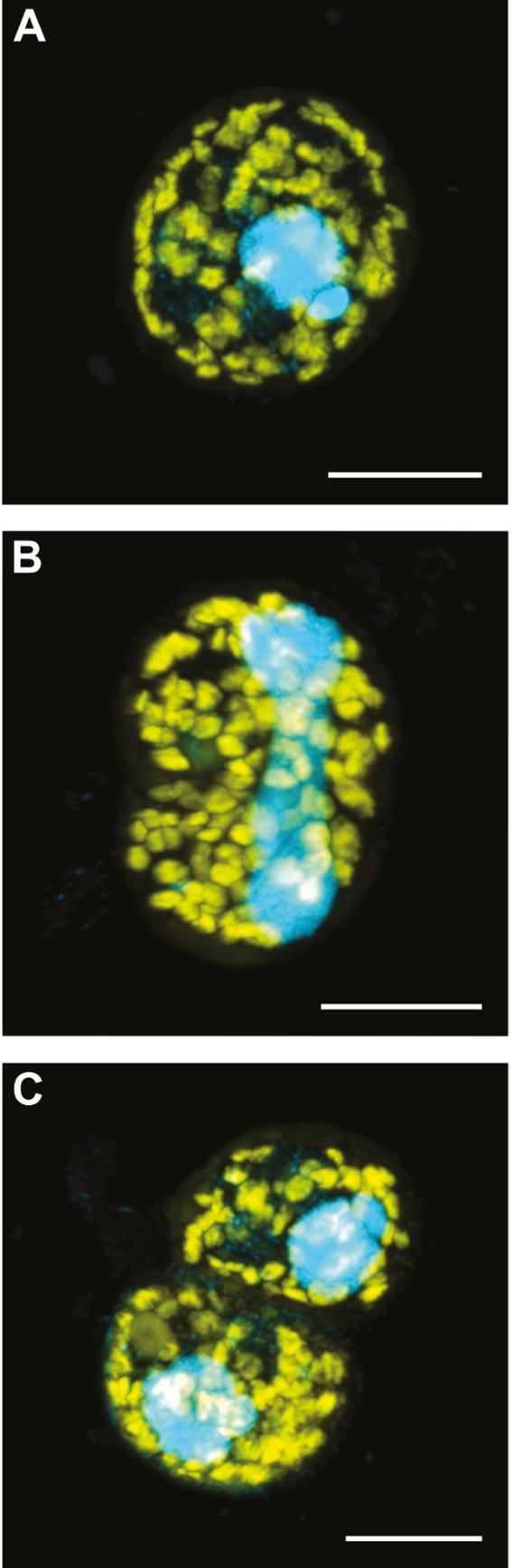
Ciliates are single-celled eukaryotes that inhabit aquatic ecosystems worldwide. They feed on bacteria and other microorganisms. Sometimes they establish symbiotic relationships that enable them to thrive in environments where they could not survive on their own.
The study by a team around Linus Zeller and Sina Schorn from the Max Planck Institute for Marine Microbiology focuses on ciliates from the class Plagiopylea, which harbor bacteria capable of nitrate respiration. By converting nitrate into dinitrogen gas, these bacterial symbionts provide the host with vital energy. The partnership is so intimate that the symbionts are considered functional analogues of mitochondria, the energy-producing organelles of plants and animals, including humans.
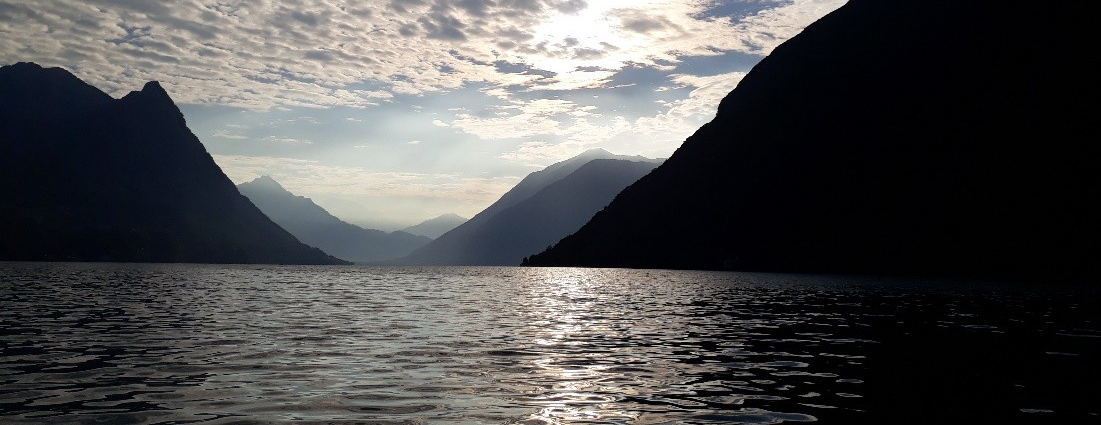
To better understand this symbiosis, the researchers from the Max Planck Institute for Marine Microbiology in Bremen, Germany, teamed up with collaborators from the Swiss Federal Institute of Aquatic Science and Technology (Eawag) and University of Basel, to look for the ciliates in the lakes of Zug and Lugano, Switzerland. Together, they investigated their distribution in the water column and compared it with environmental parameters to find out how much the symbionts influence the ecology of their hosts.
A niche shaped by symbiosis
“We found that the ciliates occur only in a narrow layer of the lakes where there is no oxygen or sulfide but some nitrate”, says Linus Zeller. “As the organisms are strictly anaerobic, their sensitivity to oxygen was no surprise. It was surprising, however, that they could not tolerate sulfide, as many other anaerobic ciliates thrive in sulfidic waters and sediments.”
The presence of nitrate proved to be particularly important. The bacterial symbionts use nitrate as an electron acceptor in a process called denitrification, which allows them to generate energy in the absence of oxygen. The findings indicate that the symbionts' denitrifying metabolism determines the ecological niche of their host. In other words, the ciliates can only exist there where the conditions are favorable for their bacterial partners.
An overlooked contributor to nitrogen removal
Denitrification is a key process in the nitrogen cycle. During this process, microorganisms convert nitrate into nitrogen compounds, ultimately producing nitrogen gas, which escapes into the atmosphere. As a result, biologically available nitrogen is removed from the water.
This is environmentally important because human activities such as agriculture and wastewater treatment discharge large amounts of nitrate into lakes, rivers and coastal waters. This can promote harmful algal blooms, degrade water quality and contribute to greenhouse gas emissions. Denitrification acts as a natural removal mechanism, helping to prevent the accumulation of too much nitrogen in aquatic ecosystems.
The Bremen researchers estimate that the ciliate-bacteria symbiosis can contribute significantly to nitrogen removal in lakes like Lake Zug and Lake Lugano, even though the contribution may vary from year to year. Until now, this process has largely been attributed to free-living bacteria. “Our findings show that eukaryotic microorganisms such as ciliates and their symbiotic bacteria may be overlooked players in the nitrogen cycle,” says Sina Schorn, who has recently transferred to the University of Gothenburg.
The researchers now want to expand their investigations to other ciliates and protists in lakes and the ocean. Their goal is to determine whether eukaryotes and their symbiotic bacteria play a larger role in global nitrogen cycling than currently acknowledged.
Original publication
Zeller LM, Schorn S, Nicolas-Asselineau L, Zopfi J, Ahmerkamp S, Schubert CJ, Lepori F, Kuypers MMM, Graf JS, Milucka J. (2026): Redox gradients define the ecological niche of ciliates with denitrifying endosymbionts in anoxic lake waters. ISME J. 2026 Jan 14;20(1):wrag043. doi: 10.1093/ismejo/wrag043
Participating institutions
- Department of Biogeochemistry, Max Planck Institute for Marine Microbiology, Bremen, Germany
- Eawag, Surface Waters-Research and Management, Kastanienbaum, Switzerland
- University of Basel, Switzerland
- University of Applied Sciences and Arts of Southern Switzerland, Switzerland
Please direct your queries to:
PhD Student
MPI for Marine Microbiology
Celsiusstr. 1
D-28359 Bremen
Germany
|
Room: |
3200 |
|
Phone: |

Group Leader
Greenhouse Gases Research Group
MPI für Marine Mikrobiologie
Celsiusstr. 1
D-28359 Bremen
Deutschland
|
Room: |
3128 |
|
Phone: |

Head of Press & Communications
MPI for Marine Microbiology
Celsiusstr. 1
D-28359 Bremen
Germany
|
Room: |
1345 |
|
Phone: |
