- Press Office
- Blogs and More
- Expedition into darkness – our blog from Spitsbergen 2026
- March 9 – 22, 2026
Expedition into darkness – now with plenty of light!
Why sampling in the Arctic Ocean?
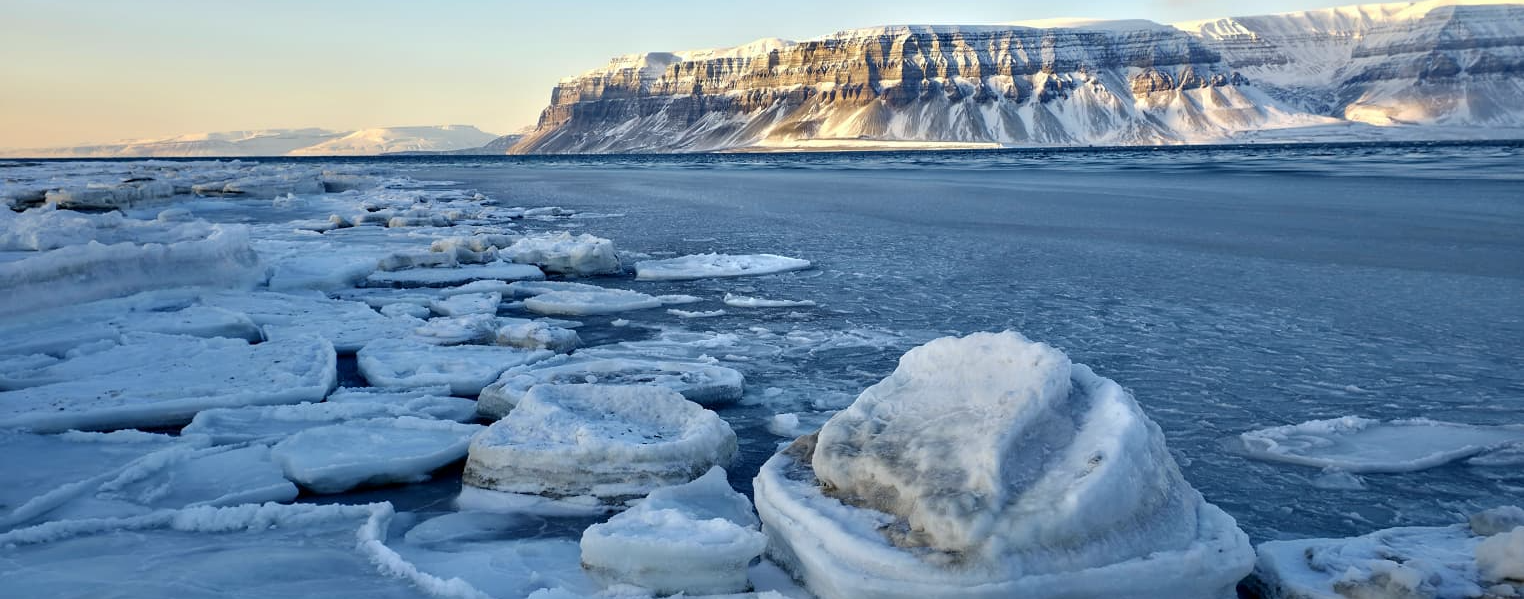
At first glance, the Arctic Ocean does not seem like a place full of life, especially in winter. Darkness dominates for months and temperatures drop down to -30°C and less. But beneath the ocean surface, a hidden and highly active world exists all year round. Tiny algae grow in the water and take up carbon dioxide, transforming it into biomass and forming the basis of the marine food web. When they die, bacteria take over: They break down this biomass and recycle it, releasing nutrients and carbon back into the system. And so it goes, all the way down to the bottom: The sandy sediments at the ocean floor, full of bacteria therein, are known to act as vast biological filters for various substances in the water.
We are interested in how these microbial communities respond to the extreme Arctic seasons and how closely life in the sediment is linked to the overlying water. By studying these processes, we aim to better understand how carbon and nutrients cycle in the ocean, and this involves getting on the boat and collecting the freezing water and sediment!
The weather setting the pace
This time, Spitsbergen showed its more unpleasant side. Temperatures went as low as -12°C, but the wind chill made it feel even colder than -20°C. Strong winds dominated much of the expedition, frequently reaching 5 to 6 Beaufort, with several storms passing through the region. It wasn't for the faint-hearted or those with weak stomachs!
For quite a while we wondered whether ship operations would be possible at all. Flexibility and spontaneity were vital here. Thus, already on the day after our plane landed in Longyearbyen, part of the team headed out to sea, while others remained on land to set up the laboratory. This way we could take advantage of a brief window of good weather, which proved to stay essential throughout the expedition.
“Trust me, it can get worse!”
In total, we conducted three successful ship-based sampling days onboard the small research vessel MS Farm, each under very different conditions.
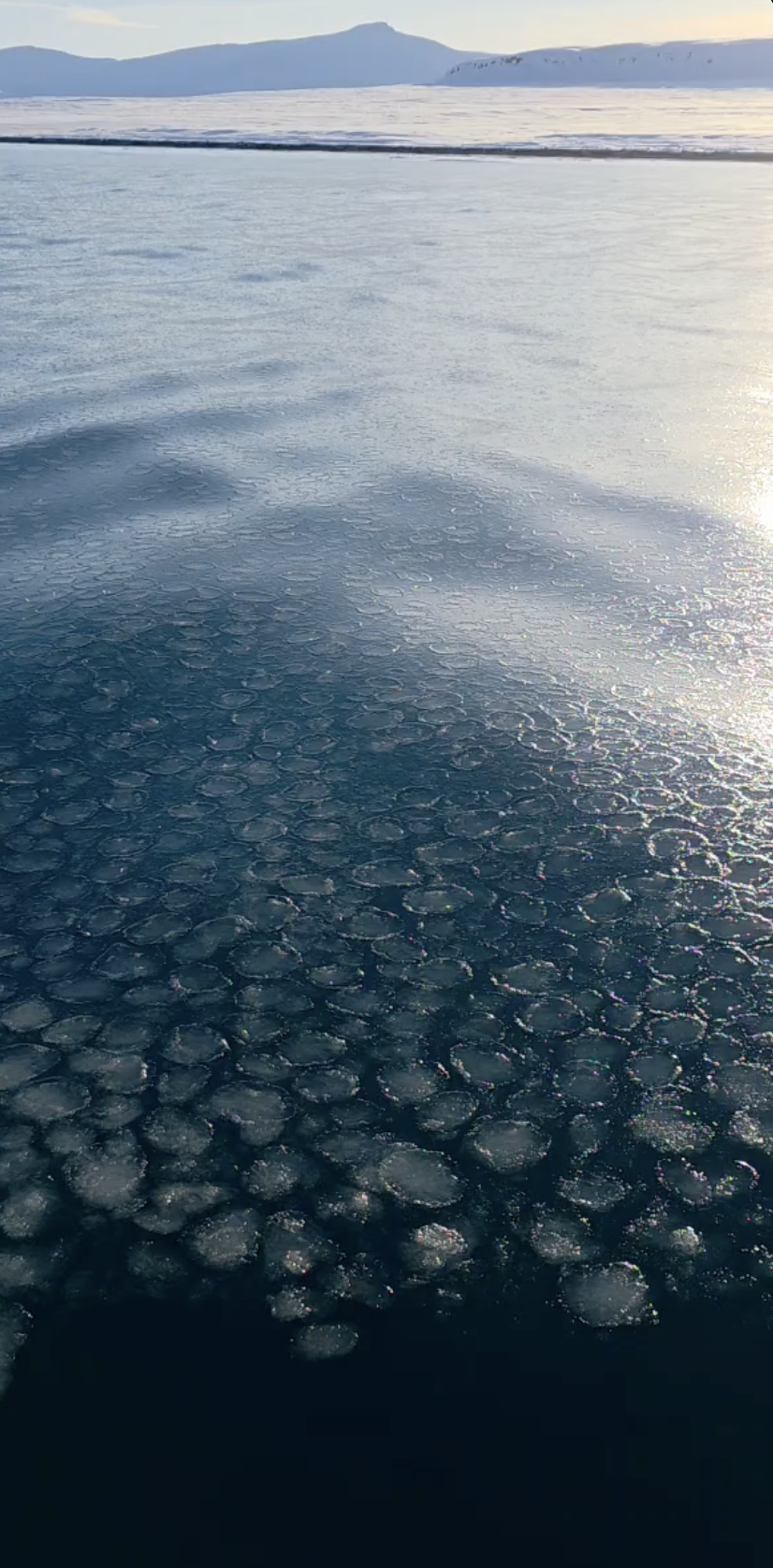
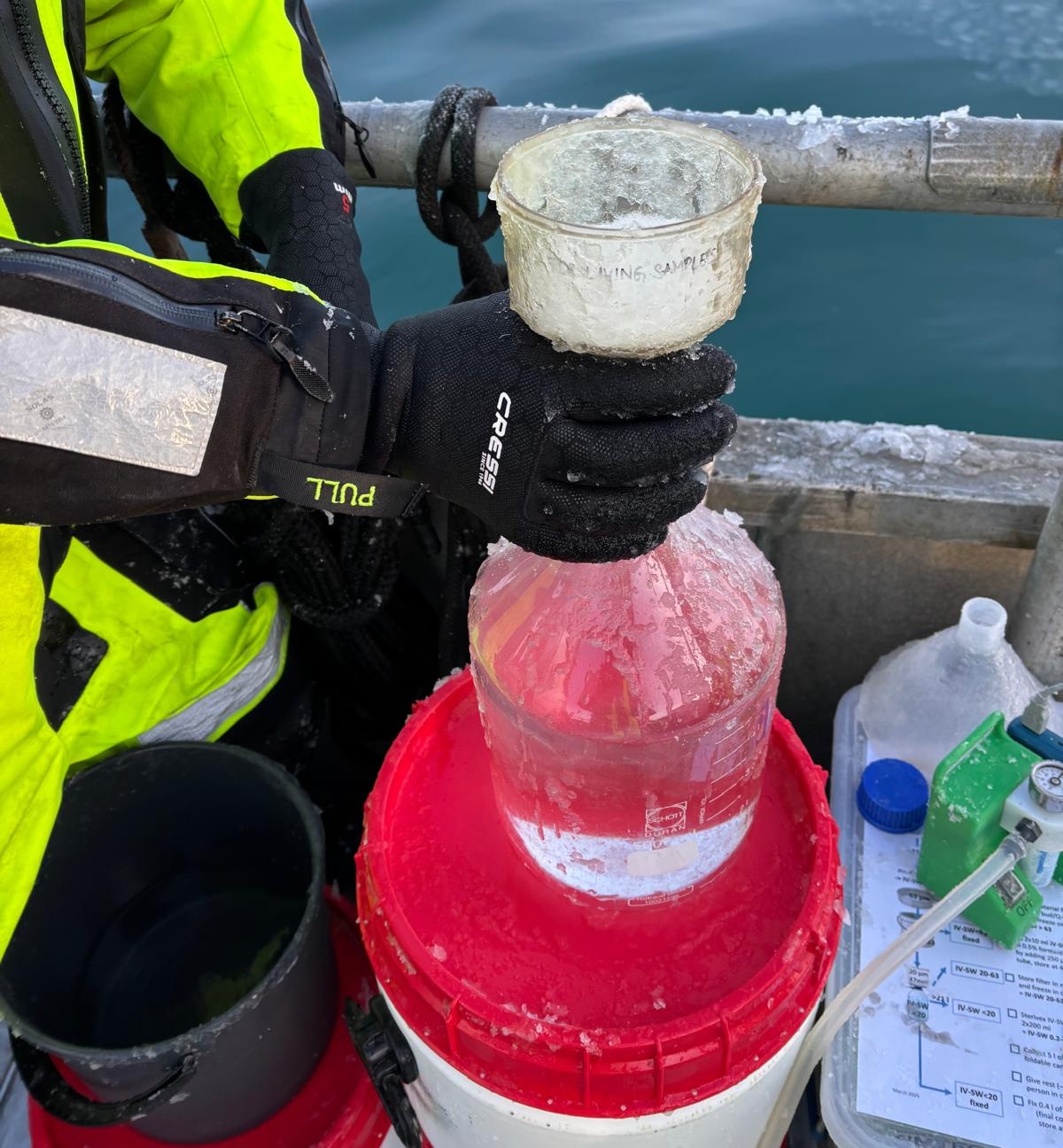
On our second cruise day, the cold got even more intense. The sea surface was forming slush and pancake ice, which consists of round, rather small flat ice disks and particularly forms in conditions of strong wave activity. High waves and strong ship movements made working on deck extremely difficult. Even filtering seawater turned into a race against the cold: The water started freezing directly on the filters! So, with our fingers freezing, we just gathered everything up as quick as possible and headed back.
Finally, at our third sampling day, we were made up for our previous suffering with comparatively mild conditions. At around –4°C and with little wind, work at sea proceeded much more smoothly and made for a pleasant conclusion of the sampling campaign.
As above, so below: A dynamic seafloor with mysterious DNA balls
In the ocean, everything is connected: Storms, waves, and strong currents rearrange the surface of the seafloor, creating changing conditions for microbial and other life to thrive.
The first major storm left behind beautifully defined ripple structures on the sandy seafloor. Here, we observed a high abundance of small spherical structures in the porewater between the grains of sand, approximately three to five micrometers in diameter, smaller than grains of fine dust. These structures contain DNA and are likely unicellular eukaryotes (protists), but showed no natural fluorescence, which is typically observed in many well-known photosynthetic microorganisms. We are still working to determine the identity of these organisms and their ecological functions.
After another storm event, things changed on the seafloor: On our third sampling day, a cloud of suspended material hovered above the seabed. It was the first time we observed this striking phenomenon and even managed to ban it on video.
The calm after the storm
Just before our expedition came to an end and we had to leave the island, Svalbard showed us how it could have been. The weather improved significantly. For the first time, we could see the mountains and valleys around Longyearbyen, the world's northernmost town. For most of the expedition, the landscape had remained hidden behind clouds and snowfall, but now, under clear skies, the Arctic revealed its full beauty.
A scientific success
Despite the challenging conditions, we were able to collect all samples and complete our fieldwork as planned. Now we are back at the Max Planck Institute in Bremen with a wealth of material and hopefully, soon some answers to our scientific questions.
Now, boxes are piling up in our storage room in Longyearbyen, awaiting our return. The next expedition to Svalbard is due in April. We will keep you informed!