- Press Office
- Blogs and More
- Expedition into darkness – our blog from Spitsbergen 2026
Expedition into darkness – our blog from Spitsbergen 2026
June 24 to July 3, 2026
Summer arrived in the Arctic
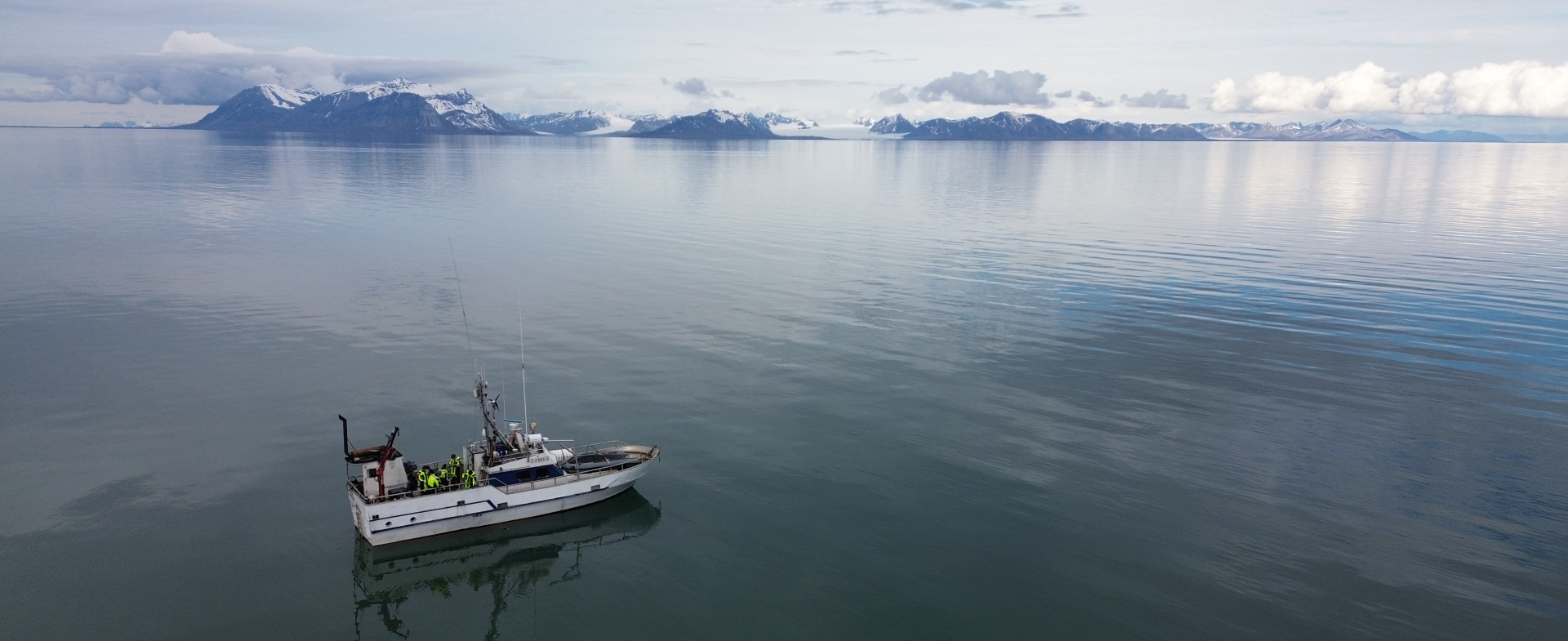
The Arctic welcomed the researchers with almost perfect working conditions. Air temperatures reached between 8 and 10°C, while seawater temperatures had warmed to around 7°C. Calm seas, little wind, and only small waves made sampling considerably easier than during the previous expeditions.Meanwhile, Svalbard’s “capital” Longyearbyen has entered its busiest season. Every day, several cruise ships arrive in the small Arctic town, bringing thousands of visitors ashore (often more people than the town’s entire population!).
A slimy surprise on the seafloor
As during previous expeditions, the researchers filtered seawater for chemical and molecular analyses and collected sediment samples to investigate microbial communities living on and beneath the seafloor.
This time, however, an unexpected discovery stole the show.
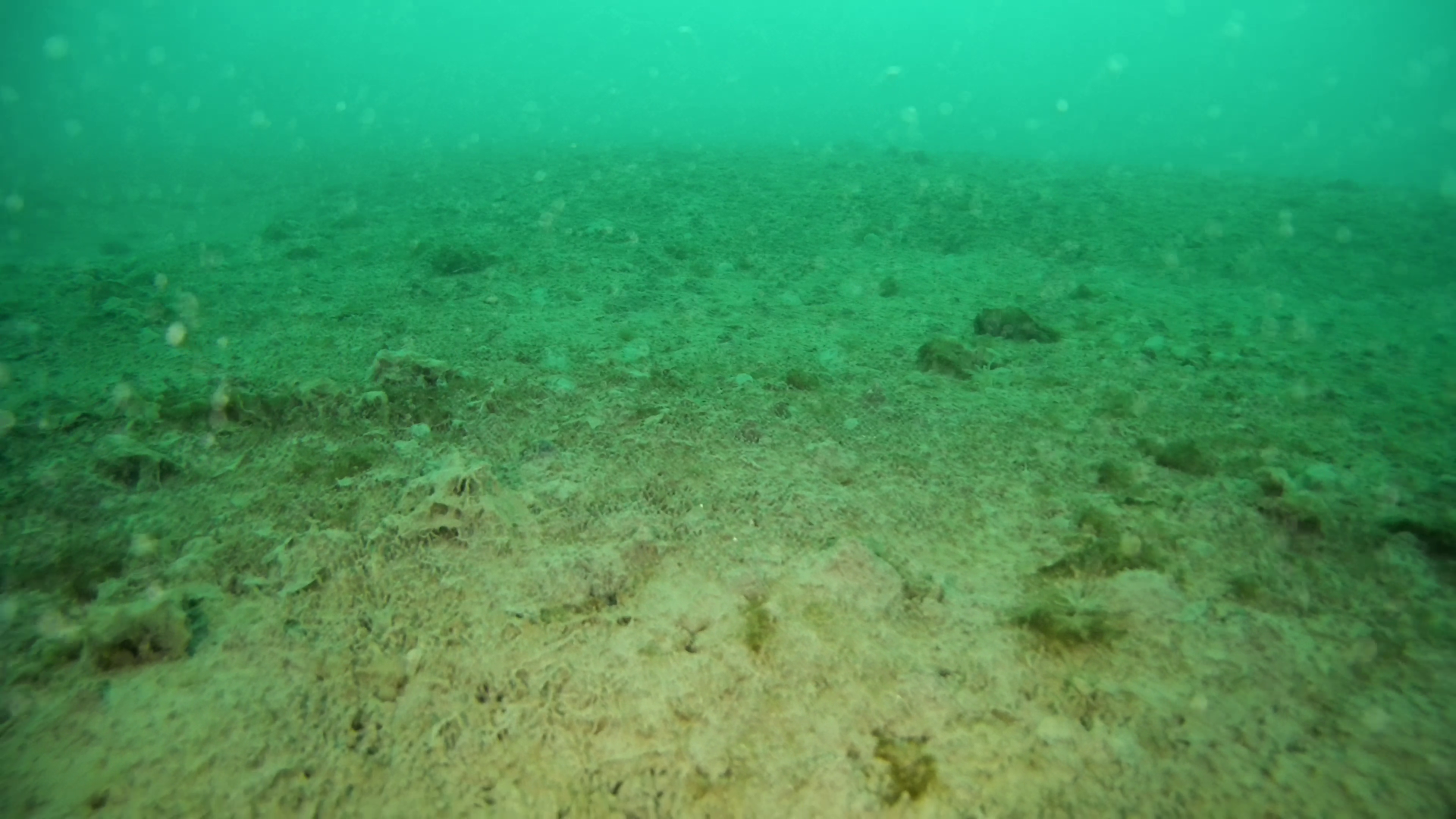
During the first sampling day, the team's underwater drone revealed vast areas of the seafloor covered with mysterious, translucent, bubble-like structures. These structures are likely discarded houses of appendicularians: small, free-swimming animals found throughout the world’s oceans. Appendicularians build large, mucus-based houses around their bodies. They use them to filter bacteria and small algae from the surrounding seawater as food. When the discarded houses sink through the water column as flakes of marine snow, they transport a huge amount of carbon to the seafloor.
When the researchers returned to the same sampling site just four days later, the scene had changed dramatically. The bubble-like material had already transformed into a ghostly, gelatinous layer covering large parts of the seafloor. The sticky mass gave the underwater landscape a spooky appearance.The team collected samples of the material.
Back in Bremen, they will analyze its chemical composition, paying particular attention to the sugars that make up the gelatinous slime. These analyses may help to better understand their role for microorganisms and carbon cycling in Arctic sediments.
A journey aver the ocean floor:
Underwater footage from the sampling site reveals gelatinous structures covering large areas of the seafloor. (© J. Wulf/Max Planck Institute for Marine Microbiology)

The Arctic Wildlife
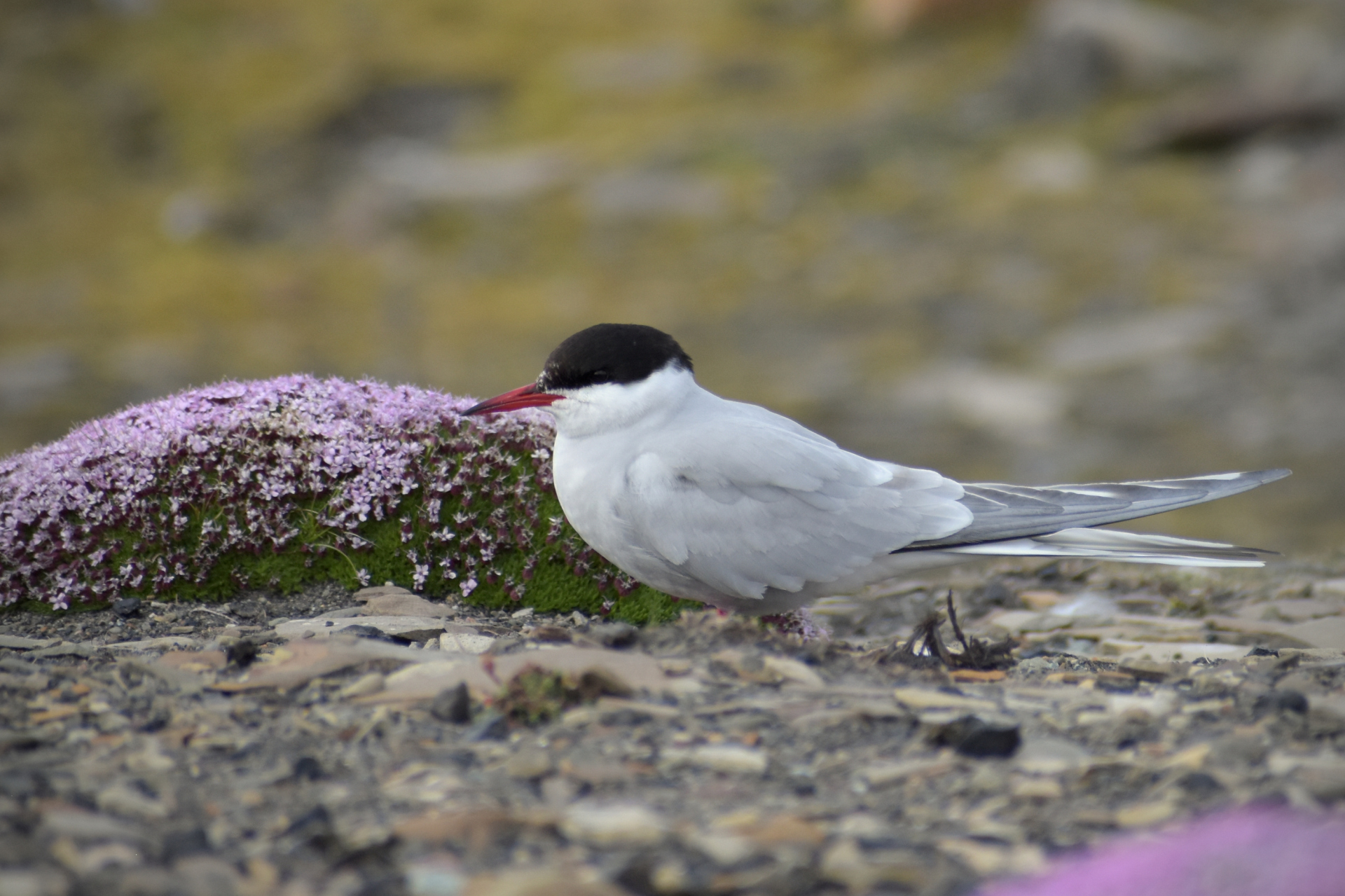
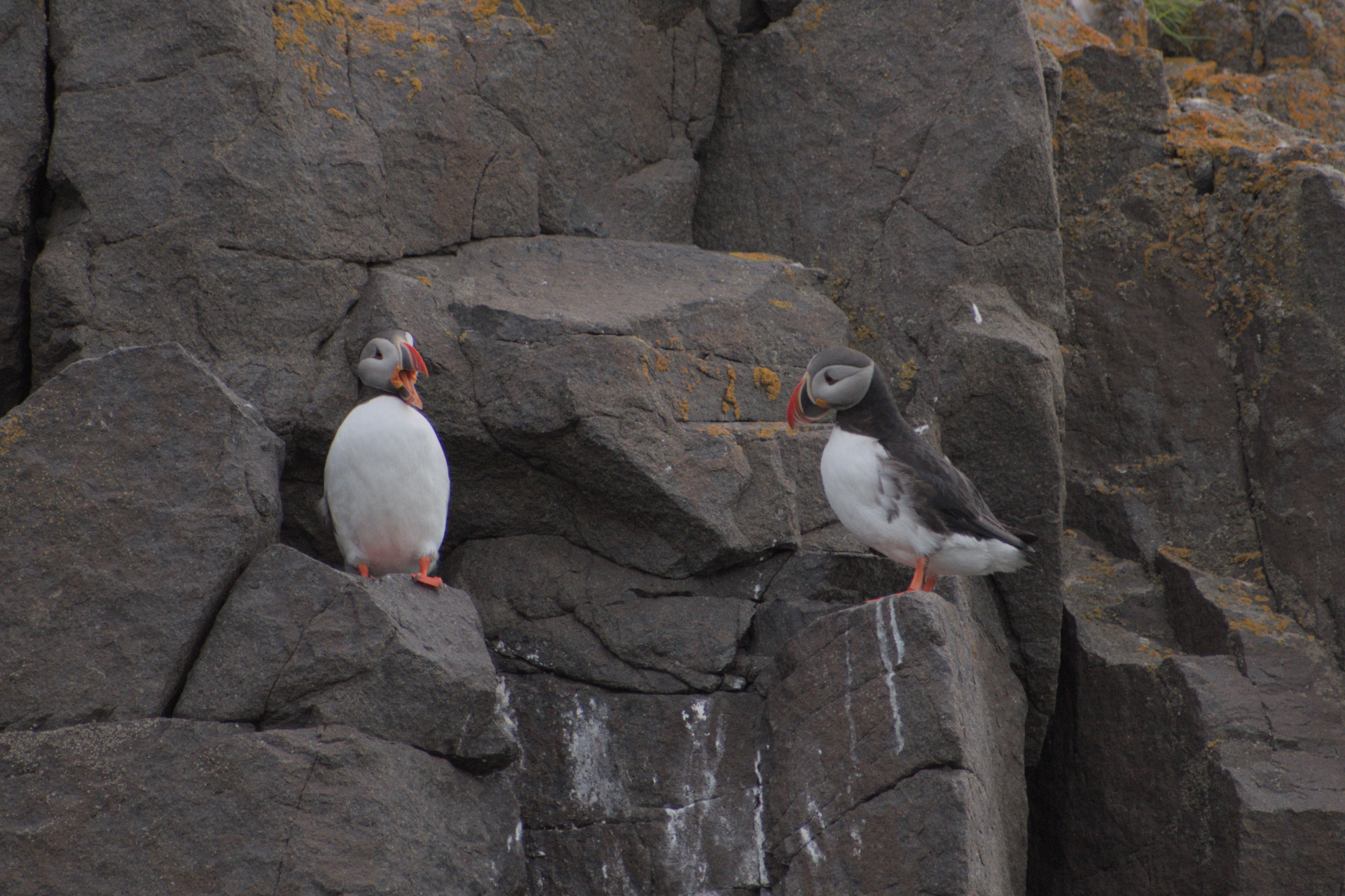
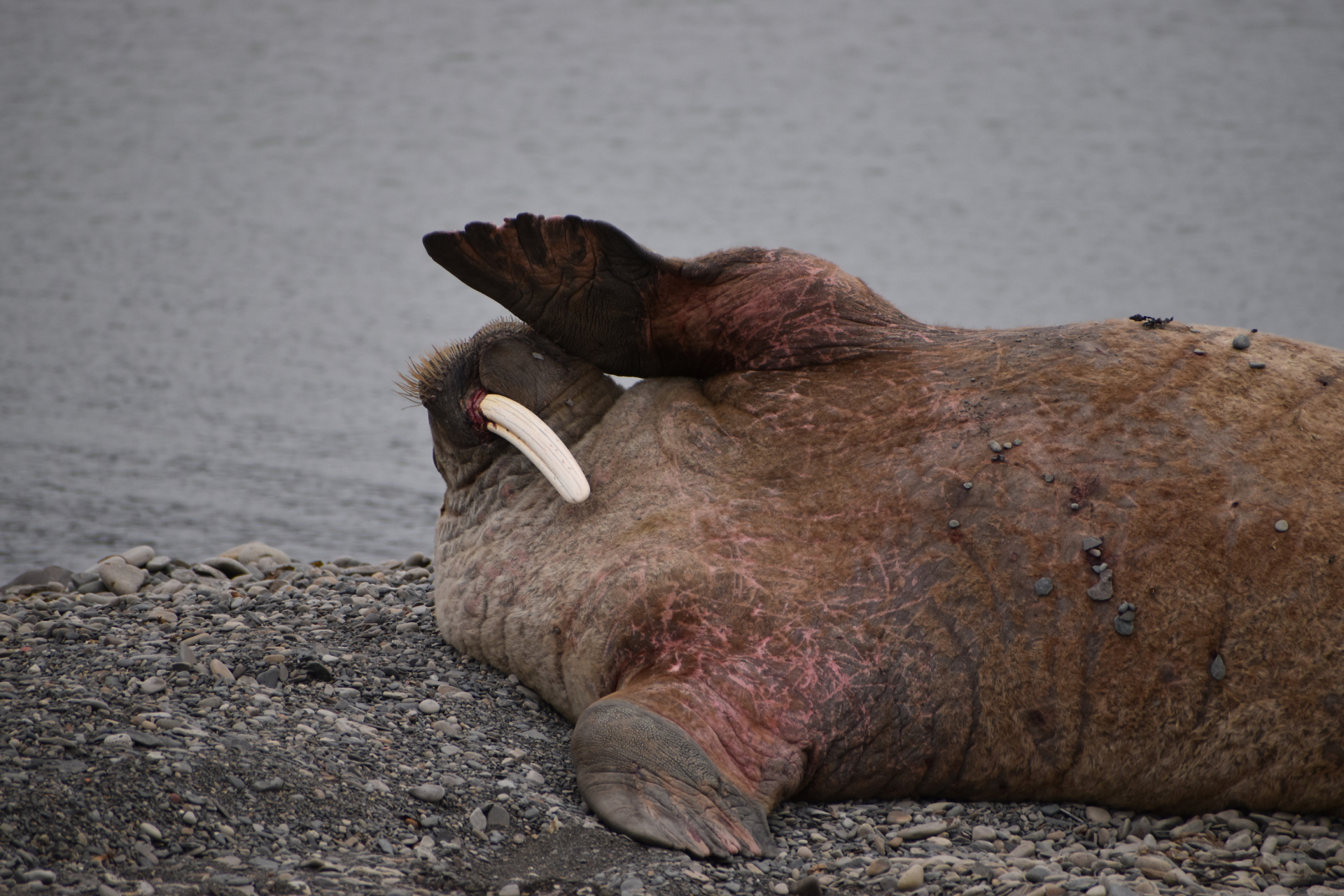
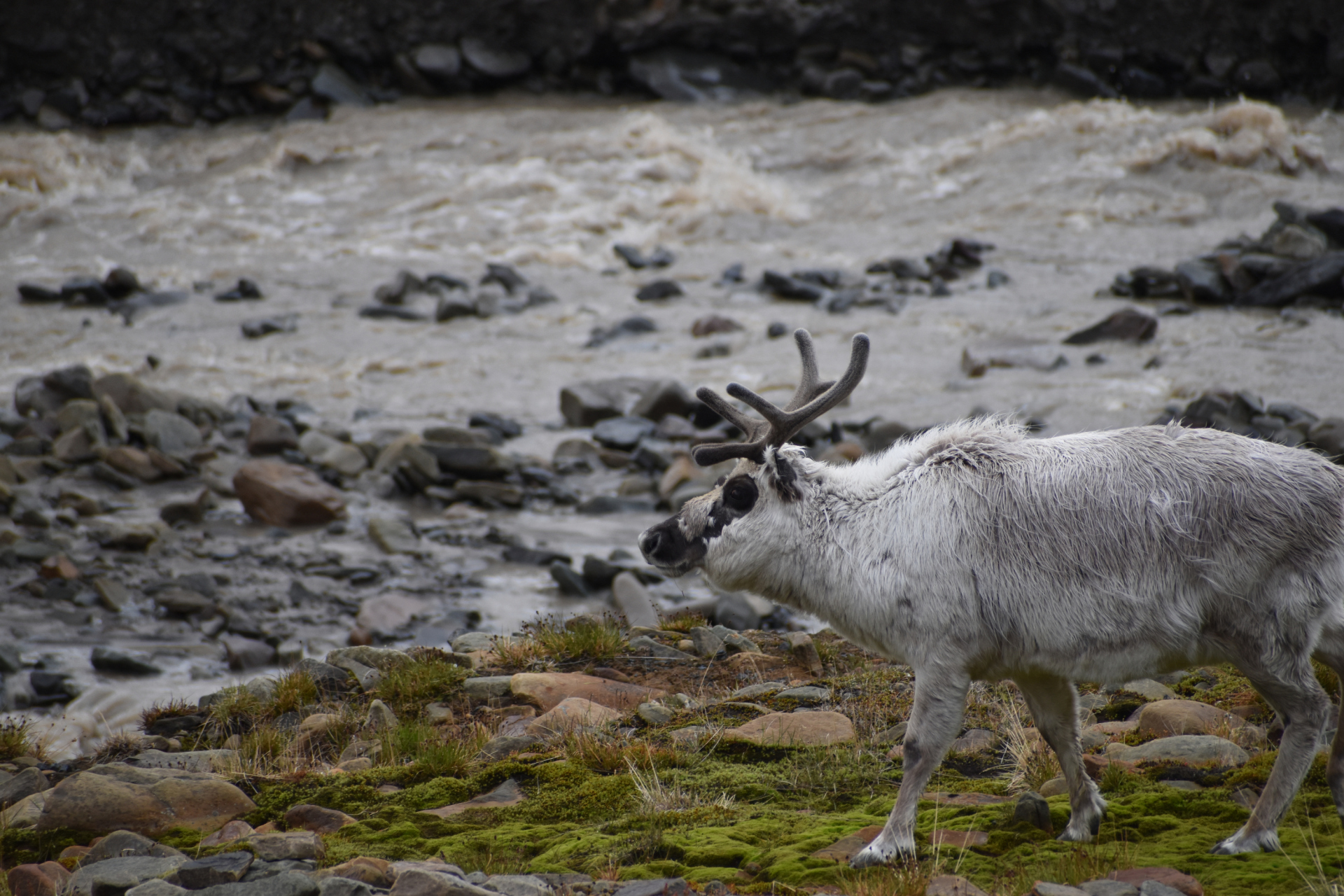
The photos show some of Svalbard’s iconic wildlife, including Svalbard reindeer, Arctic terns, Atlantic puffins, and a resting walrus. (© R. Schüren / Max Planck Institute for Marine Microbiology)
April 25 to May 9, 2026
In early May, the researchers from the Max Planck Institute for Marine Microbiology visited Spitsbergen under the midnight sun and witnessed the Arctic Ocean awakening with its annual spring bloom. Now they have returned, for their fourth expedition of the year. Ice and snow have further retreated, temperatures climbed well above freezing point, and life above and below the water is in full swing.
From darkness to bloom
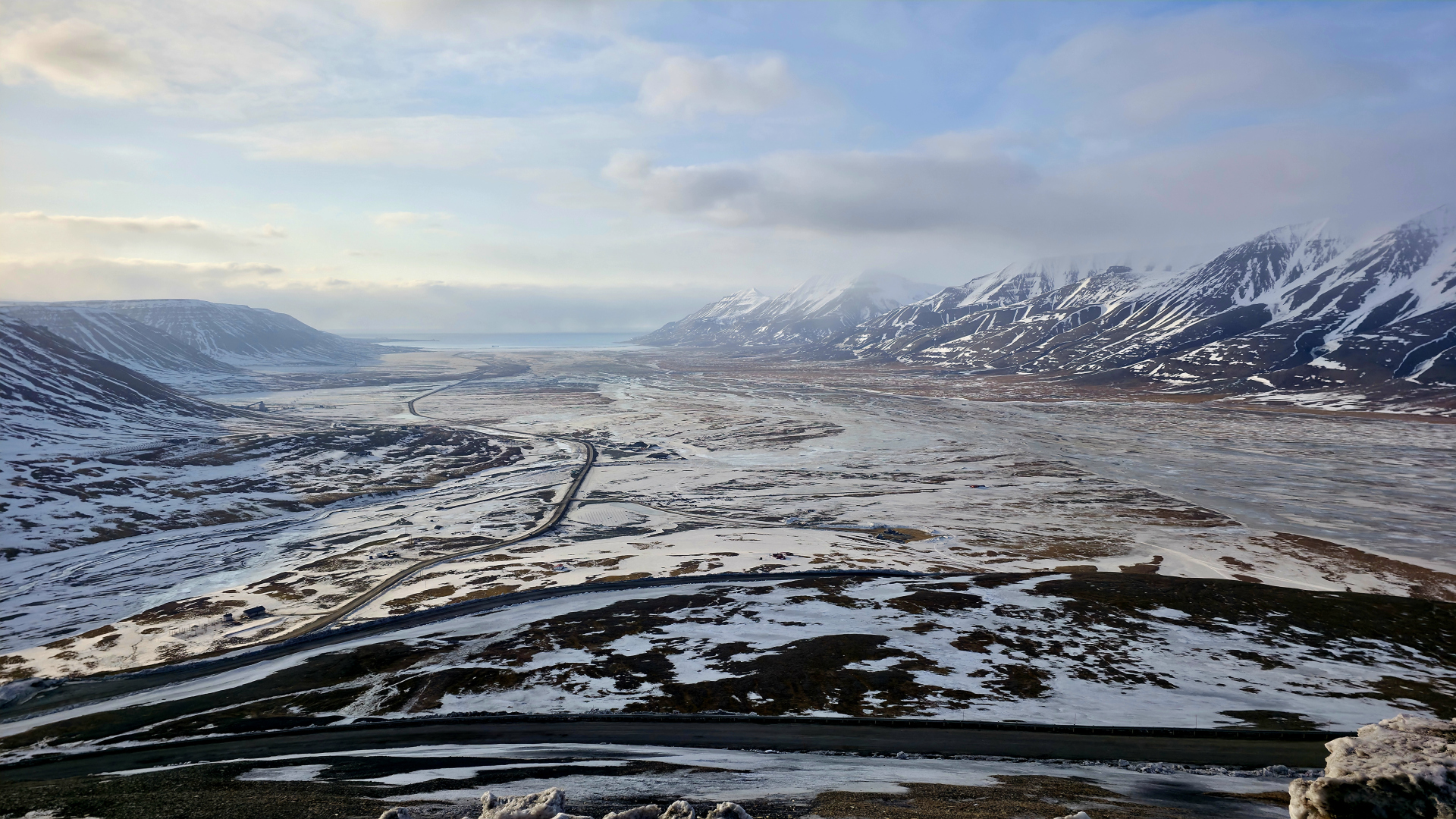
The team returned to familiar sampling sites in Isfjorden, now experiencing the Arctic in 24-hour daylight.
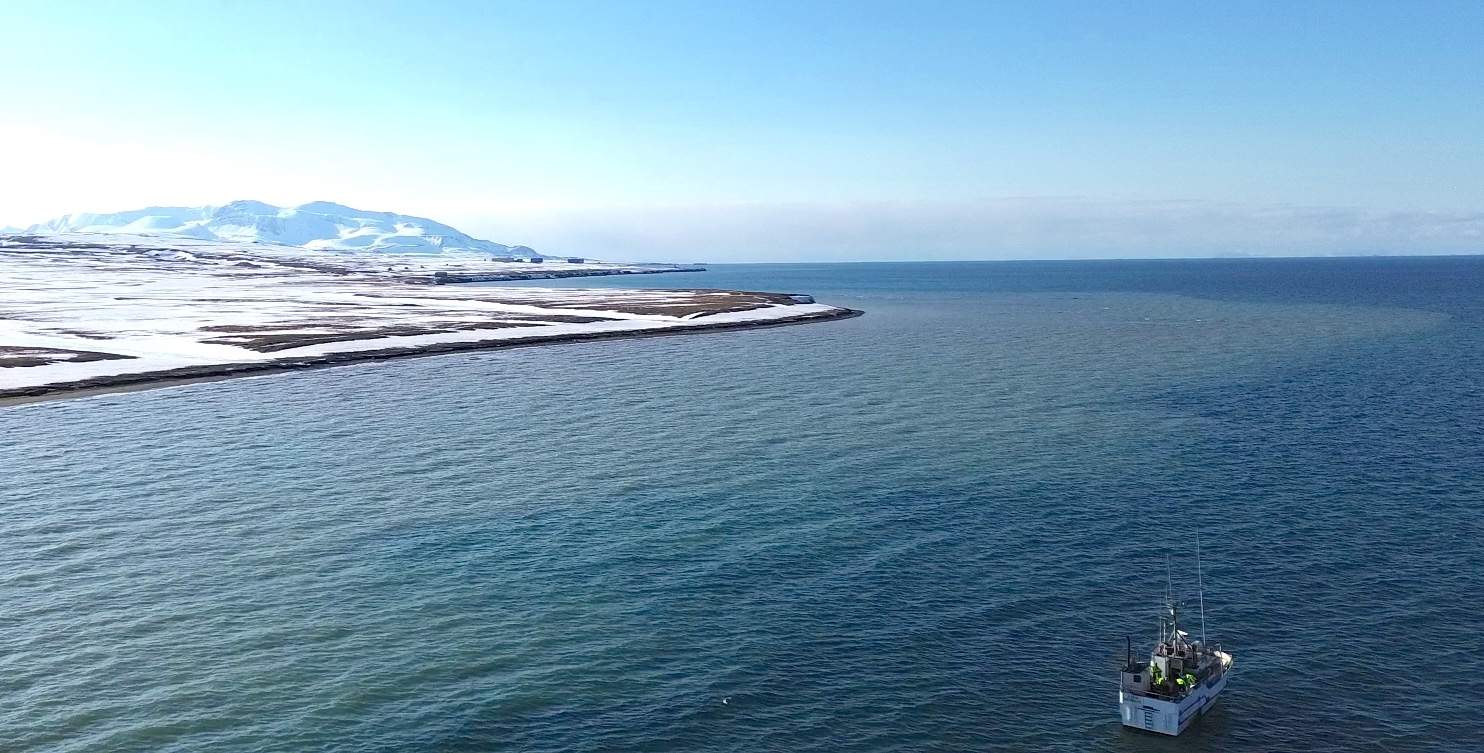
In the water, a strong spring bloom is currently underway, driven by the light and temperatures around zero degrees. The sea appears green, and phytoplankton and zooplankton are abundant, forming the basis of a rapidly growing food web.
This seasonal shift is also reflected in the microbial realm. Compared to the previous expedition in March, bacterial numbers in the seawater have increased roughly fivefold. Bacteria are not only more abundant, but also markedly more active: Measurements indicate higher oxygen consumption and increased rates of peptide and sugar degradation. Obviously, there is plenty of yummy food at hand – likely due to the sudden availability of fresh organic material released during the bloom.
Busy waters above and below
The return of light has not only awakened microscopic life. Also, many birds have returned to the archipelago. On one sampling day, a group of beluga whales passed close to the research vessel: a memorable sight for the team!
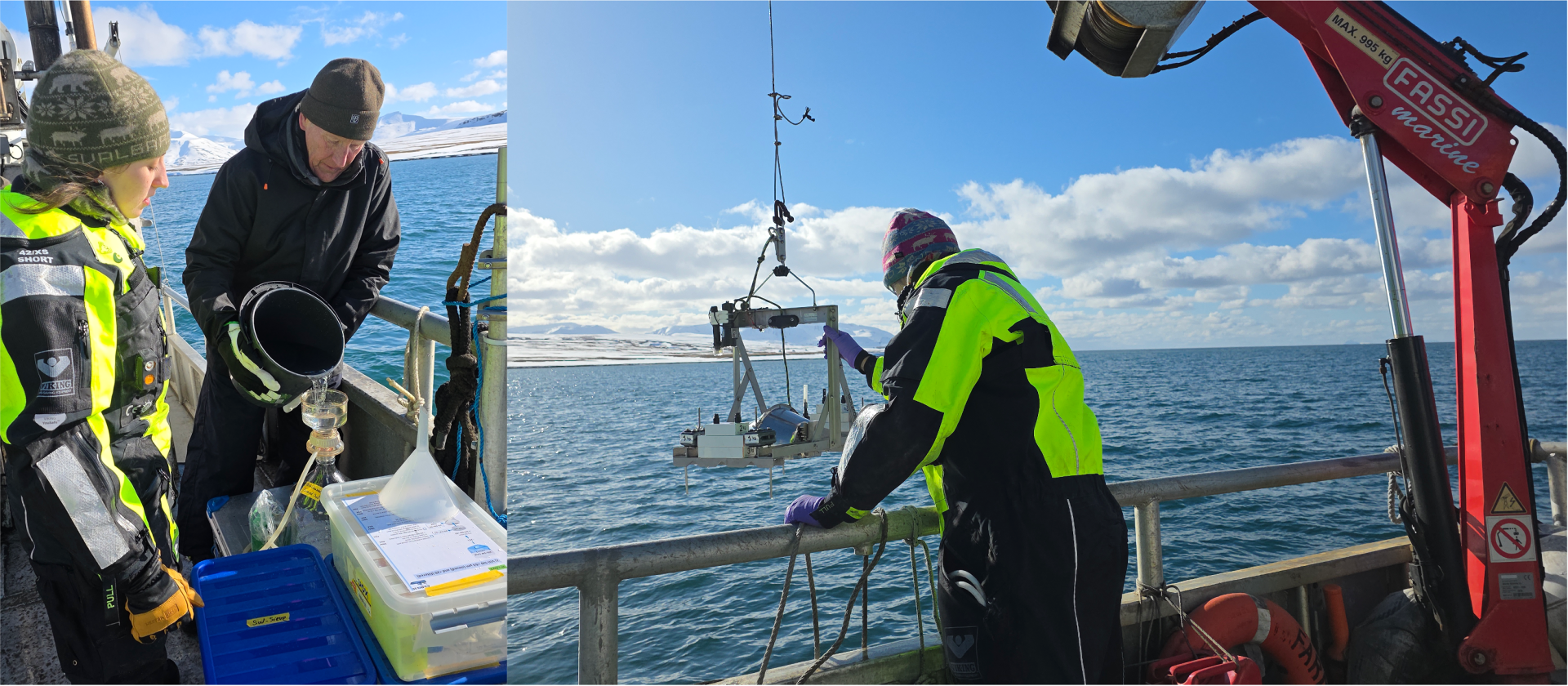
At the same time, working conditions have become noticeably easier. With milder temperatures, much of the snow had already melted. On board, this made a significant difference: Equipment ran more smoothly, and routine tasks such as filtering seawater no longer felt like a battle against freezing temperatures and icy challenges.
Research in the midnight sun
Despite the improved conditions, the scientific work remains intense. With the sun never setting, work on board followed a new rhythm. Long days allowed the researchers to process samples well into the night Fatigue sets in later, allowing for long and productive days at sea and in the lab.
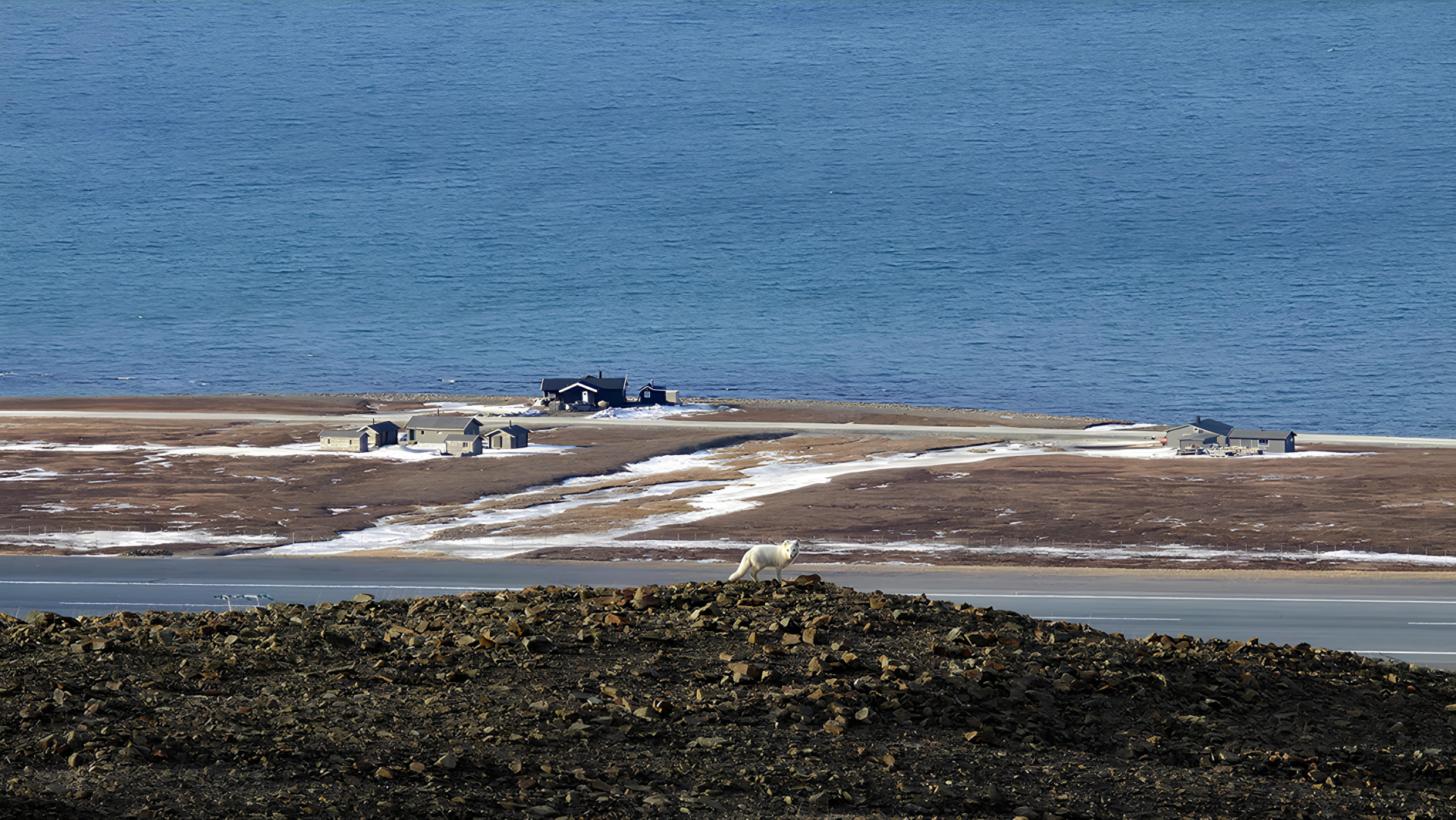
For this expedition, two junior researchers were part of the team: Malena Heinrichs and Paul Mock, master’s students in our MarMic program, joined the expedition as part of their lab rotation. They actively supported the sampling work while gaining first-hand experience of Arctic field research, an experience they will certainly not forget!
Looking ahead
As usual, besides beautiful impressions and need for sleep, the team will bring back a wealth of samples and data, capturing the Arctic Ocean in a completely different seasonal state.
The first comparison between the dark winter months and the vibrant spring bloom, evident to the naked eye, already highlights how strongly life in the ocean responds to changing environmental conditions. Further analyses in the laboratory will now help to better understand these dynamics and their role in global biogeochemical cycles.
The next expedition to Svalbard is on the way and is due in late June. We will keep you posted!
March 9 to 22, 2026
Expedition into darkness – now with plenty of light!
Why sampling in the Arctic Ocean?
At first glance, the Arctic Ocean does not seem like a place full of life, especially in winter. Darkness dominates for months and temperatures drop down to -30°C and less. But beneath the ocean surface, a hidden and highly active world exists all year round. Tiny algae grow in the water and take up carbon dioxide, transforming it into biomass and forming the basis of the marine food web. When they die, bacteria take over: They break down this biomass and recycle it, releasing nutrients and carbon back into the system. And so it goes, all the way down to the bottom: The sandy sediments at the ocean floor, full of bacteria therein, are known to act as vast biological filters for various substances in the water.
We are interested in how these microbial communities respond to the extreme Arctic seasons and how closely life in the sediment is linked to the overlying water. By studying these processes, we aim to better understand how carbon and nutrients cycle in the ocean, and this involves getting on the boat and collecting the freezing water and sediment!
The weather setting the pace
This time, Spitsbergen showed its more unpleasant side. Temperatures went as low as -12°C, but the wind chill made it feel even colder than -20°C. Strong winds dominated much of the expedition, frequently reaching 5 to 6 Beaufort, with several storms passing through the region. It wasn't for the faint-hearted or those with weak stomachs!
For quite a while we wondered whether ship operations would be possible at all. Flexibility and spontaneity were vital here. Thus, already on the day after our plane landed in Longyearbyen, part of the team headed out to sea, while others remained on land to set up the laboratory. This way we could take advantage of a brief window of good weather, which proved to stay essential throughout the expedition.
“Trust me, it can get worse!”
In total, we conducted three successful ship-based sampling days onboard the small research vessel MS Farm, each under very different conditions.
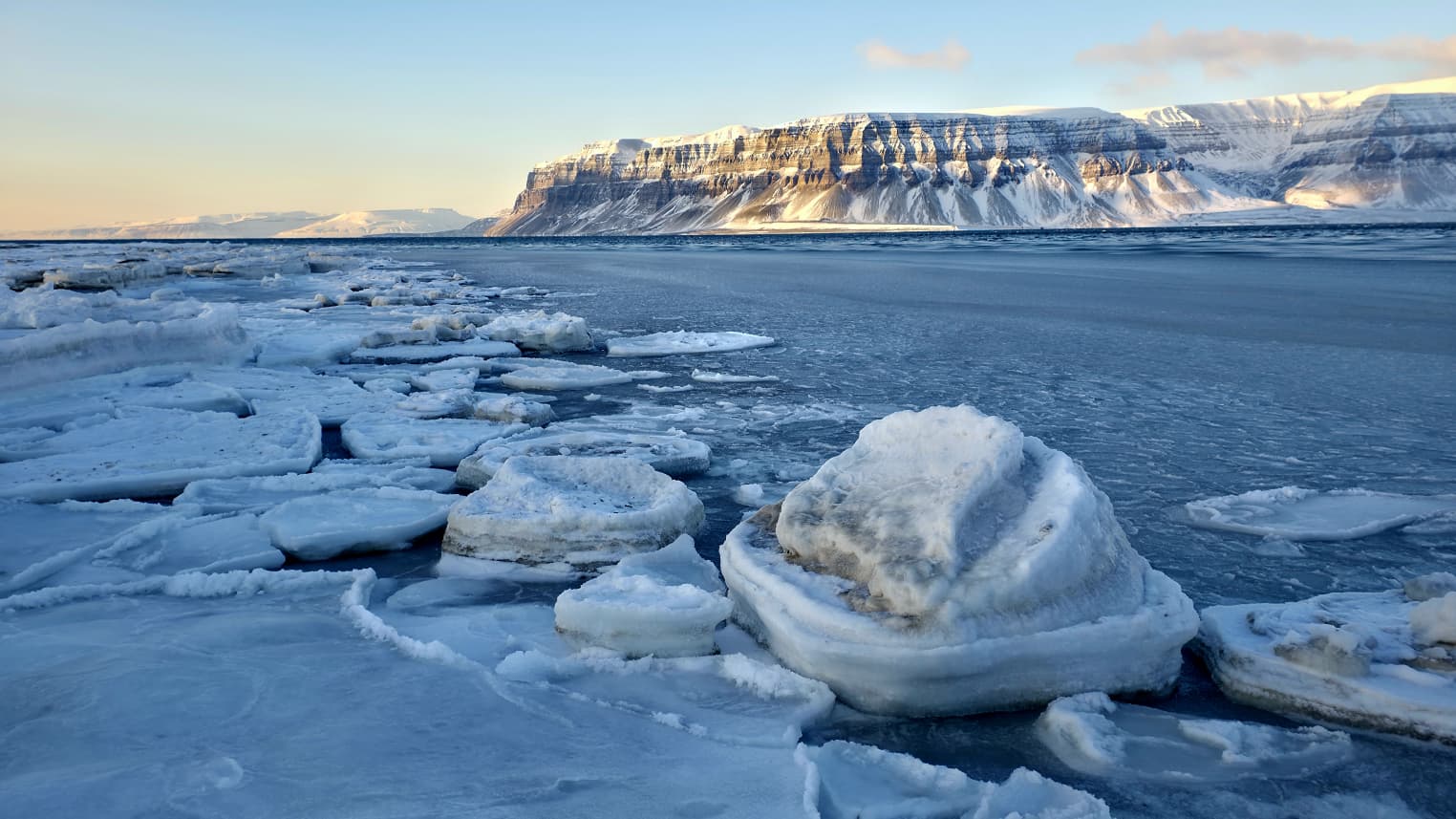
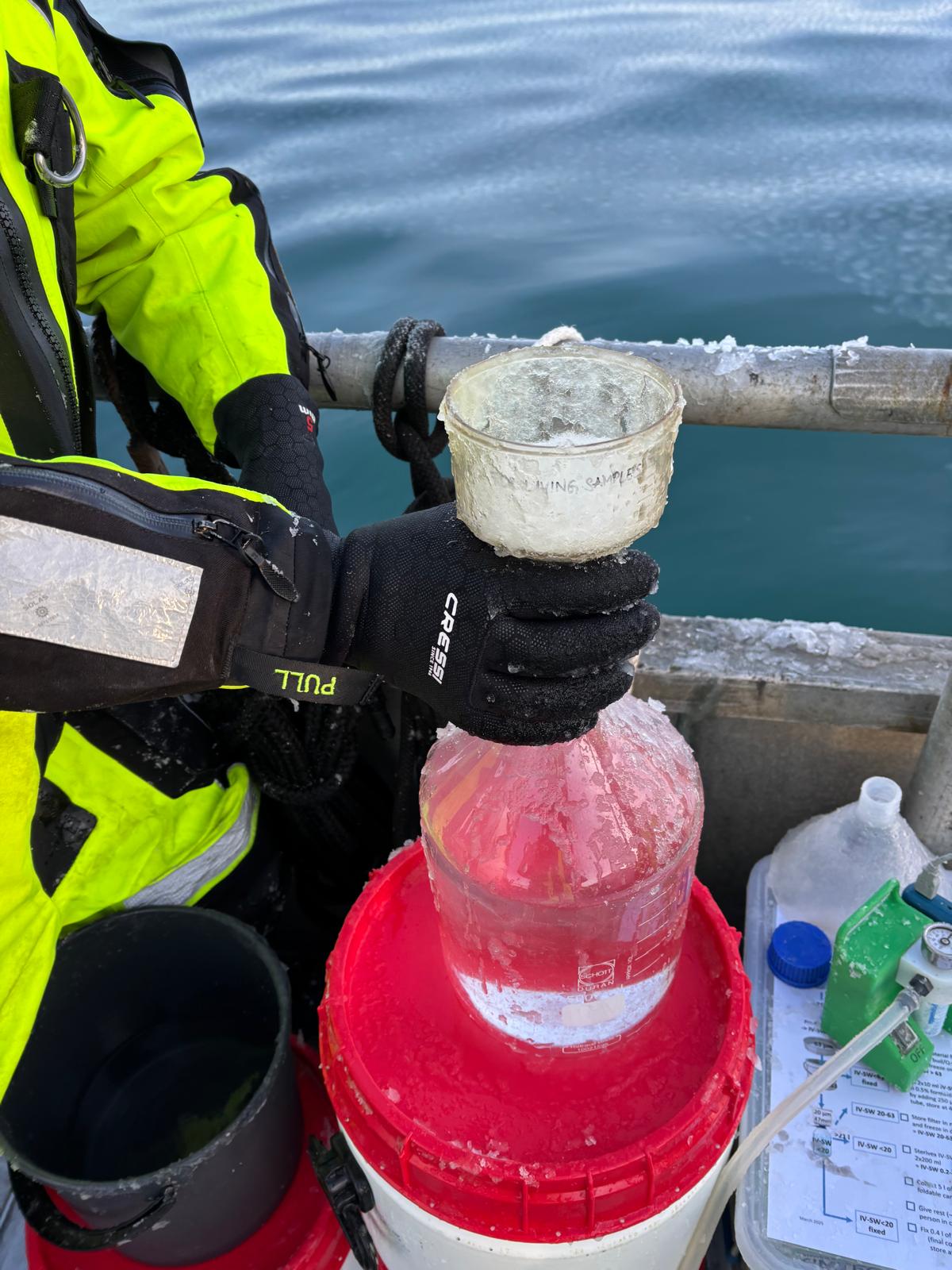
On our second cruise day, the cold got even more intense. The sea surface was forming slush and pancake ice, which consists of round, rather small flat ice disks and particularly forms in conditions of strong wave activity. High waves and strong ship movements made working on deck extremely difficult. Even filtering seawater turned into a race against the cold: The water started freezing directly on the filters! So, with our fingers freezing, we just gathered everything up as quick as possible and headed back.
Finally, at our third sampling day, we were made up for our previous suffering with comparatively mild conditions. At around –4°C and with little wind, work at sea proceeded much more smoothly and made for a pleasant conclusion of the sampling campaign.
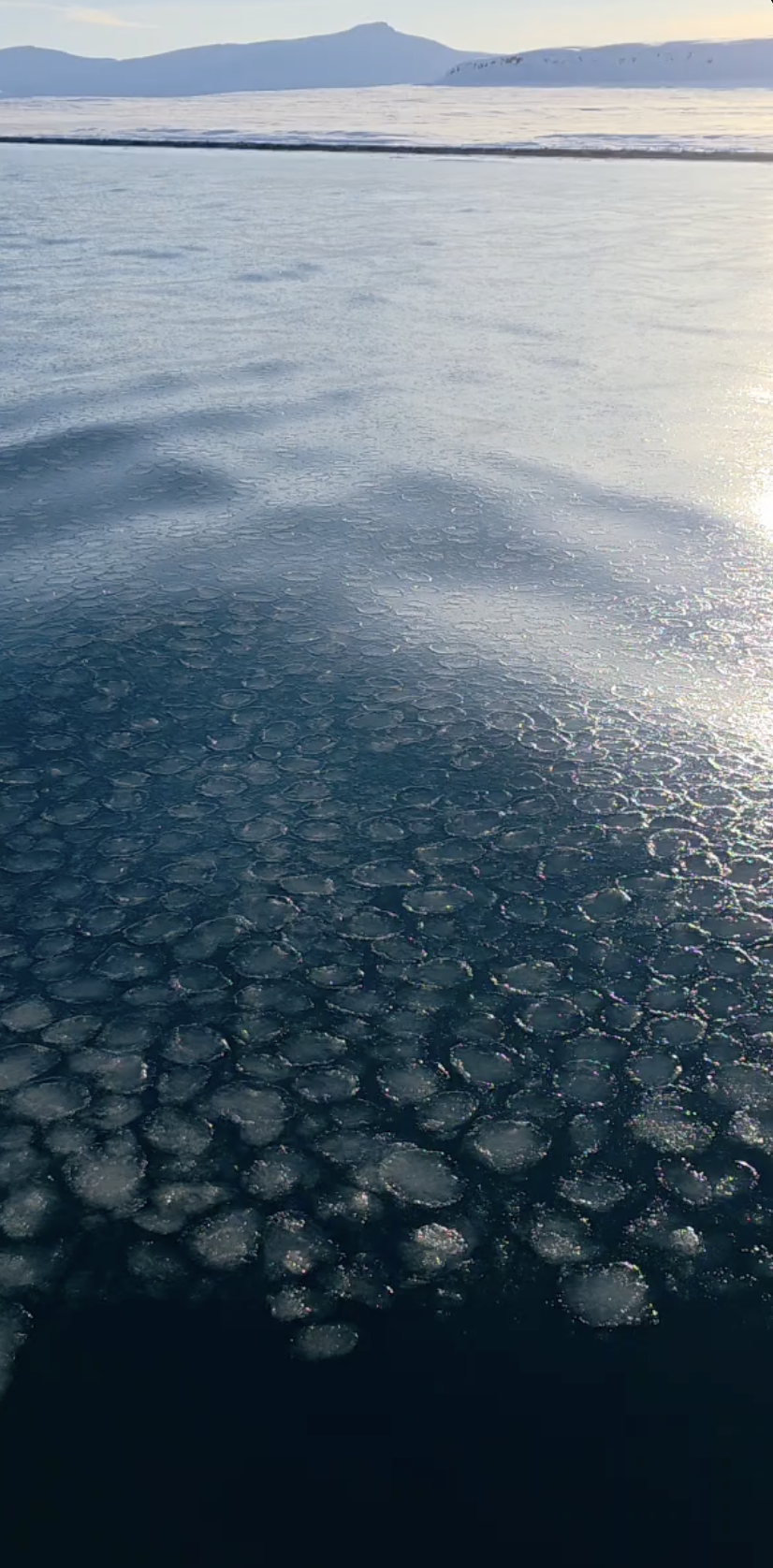
As above, so below: A dynamic seafloor with mysterious DNA balls
In the ocean, everything is connected: Storms, waves, and strong currents rearrange the surface of the seafloor, creating changing conditions for microbial and other life to thrive.
The first major storm left behind beautifully defined ripple structures on the sandy seafloor. Here, we observed a high abundance of small spherical structures in the porewater between the grains of sand, approximately three to five micrometers in diameter, smaller than grains of fine dust. These structures contain DNA and are likely unicellular eukaryotes (protists), but showed no natural fluorescence, which is typically observed in many well-known photosynthetic microorganisms. We are still working to determine the identity of these organisms and their ecological functions.
After another storm event, things changed on the seafloor: On our third sampling day, a cloud of suspended material hovered above the seabed. It was the first time we observed this striking phenomenon and even managed to ban it on video.
The calm after the storm
Just before our expedition came to an end and we had to leave the island, Svalbard showed us how it could have been. The weather improved significantly. For the first time, we could see the mountains and valleys around Longyearbyen, the world's northernmost town. For most of the expedition, the landscape had remained hidden behind clouds and snowfall, but now, under clear skies, the Arctic revealed its full beauty.
A scientific success
Despite the challenging conditions, we were able to collect all samples and complete our fieldwork as planned. Now we are back at the Max Planck Institute in Bremen with a wealth of material and hopefully, soon some answers to our scientific questions.
Now, boxes are piling up in our storage room in Longyearbyen, awaiting our return. The next expedition to Svalbard is due in April. We will keep you informed!
January 26, 2026
Our polar explorers have returned from the High North, full of wonderful impressions and, more importantly, a wealth of valuable samples and data. ow Katrin Knittel and her team are back at the Max Planck Institute for Marine Microbiology, working in the laboratory, workshop and office to extract the first information from the collected samples. While part of the team is still wrapping up the last expedition, preparations for the next one are already in full swing. In collaboration with the Max Planck Society's sequencing centre in Cologne, our technicians are busy obtaining DNA sequences from bacteria in the collected water and sediment samples. This data will help us to prepare and adapt the next sampling campaign to the new findings. At the same time, we are packing new boxes in Bremen with additional scientific equipment. The next expedition to Svalbard is just around the corner: On 9 March, our researchers will set off for the Arctic once again.
We hope to see more great pictures and stories that give us an insight into the exciting work in marine microbiology!
January 10 to 24, 2026
While northern Germany was threatened with being buried in snow chaos in mid-January, researchers from the Max Planck Institute for Marine Microbiology set off for even more wintry climes: Spitsbergen. This archipelago, which belongs to Norway, lies far up in the Arctic Ocean, where winter is particularly dark, cold and impressive.
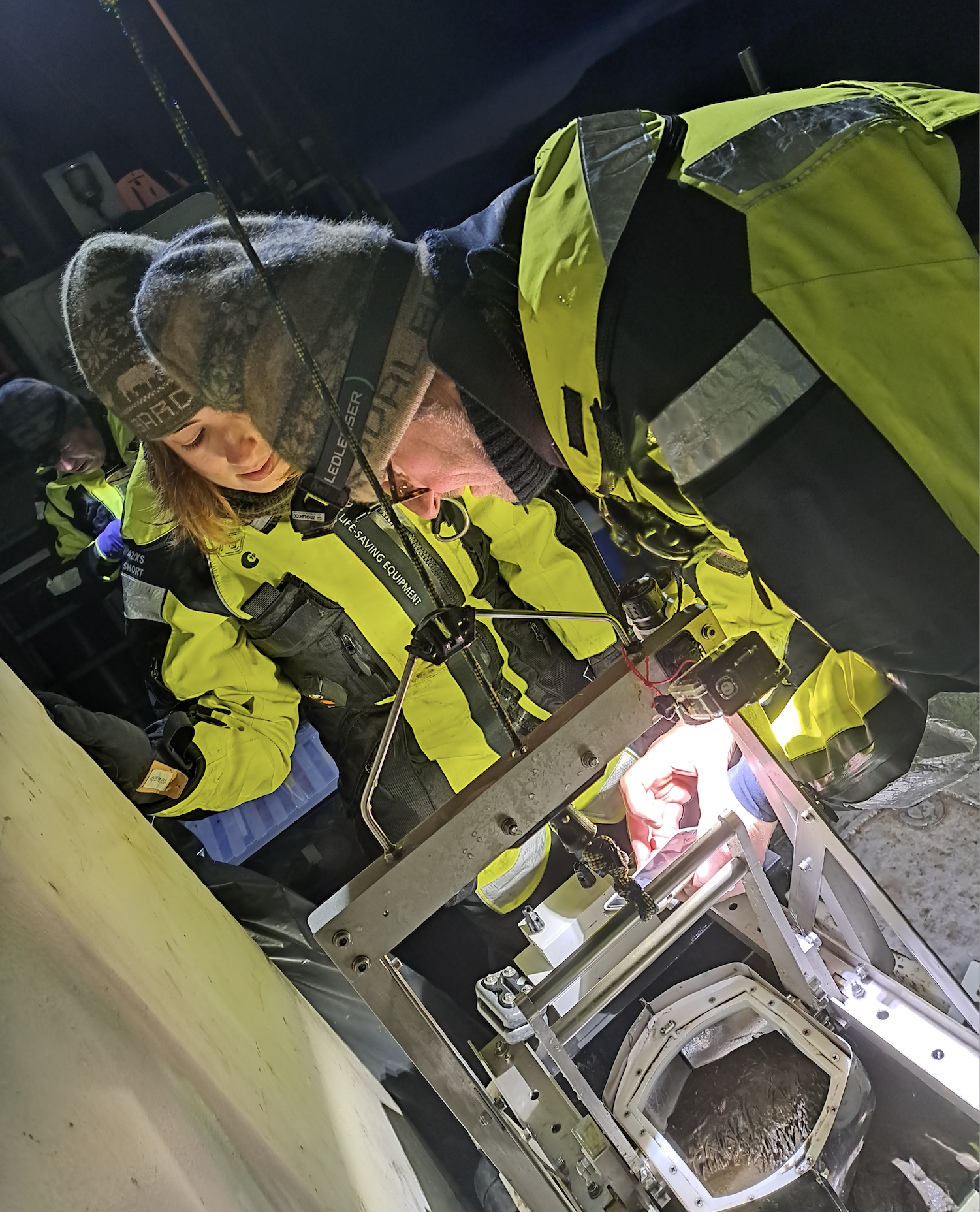
The team led by project leader Katrin Knittel, which has now ventured to the far north, is particularly interested in the life of bacteria in sandy coastal sediments and their close connection to the overlying water. From previous expeditions, the researchers are familiar with sampling sites in Isfjorden on the west side of the island, which they will now revisit. To reach these sites and take samples, the team from Bremen is travelling on the long-serving small research vessel MS Farm, which has been sailing the polar seas longer than the famous icebreaker Polarstern.
Working under a colourful sky
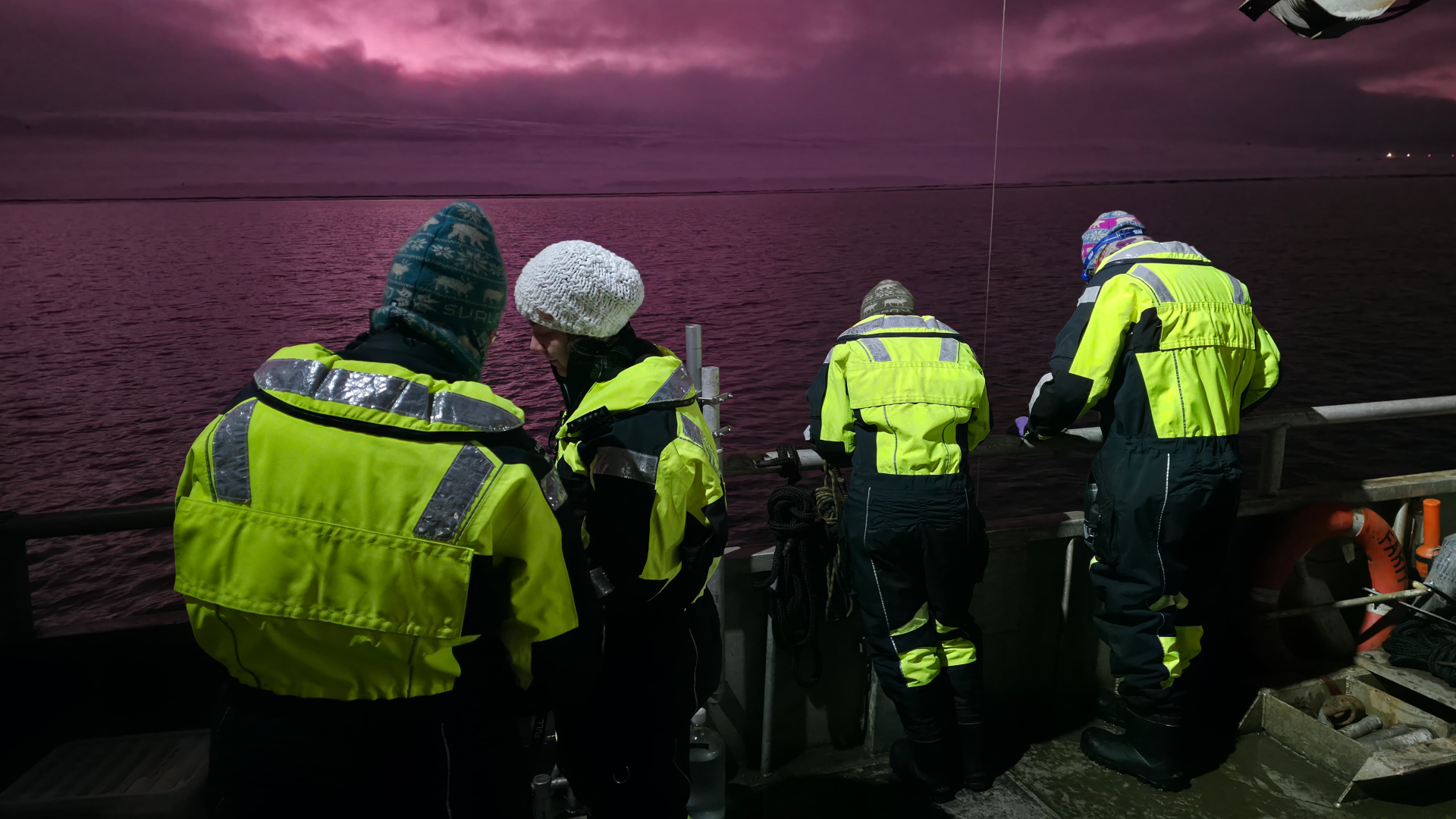
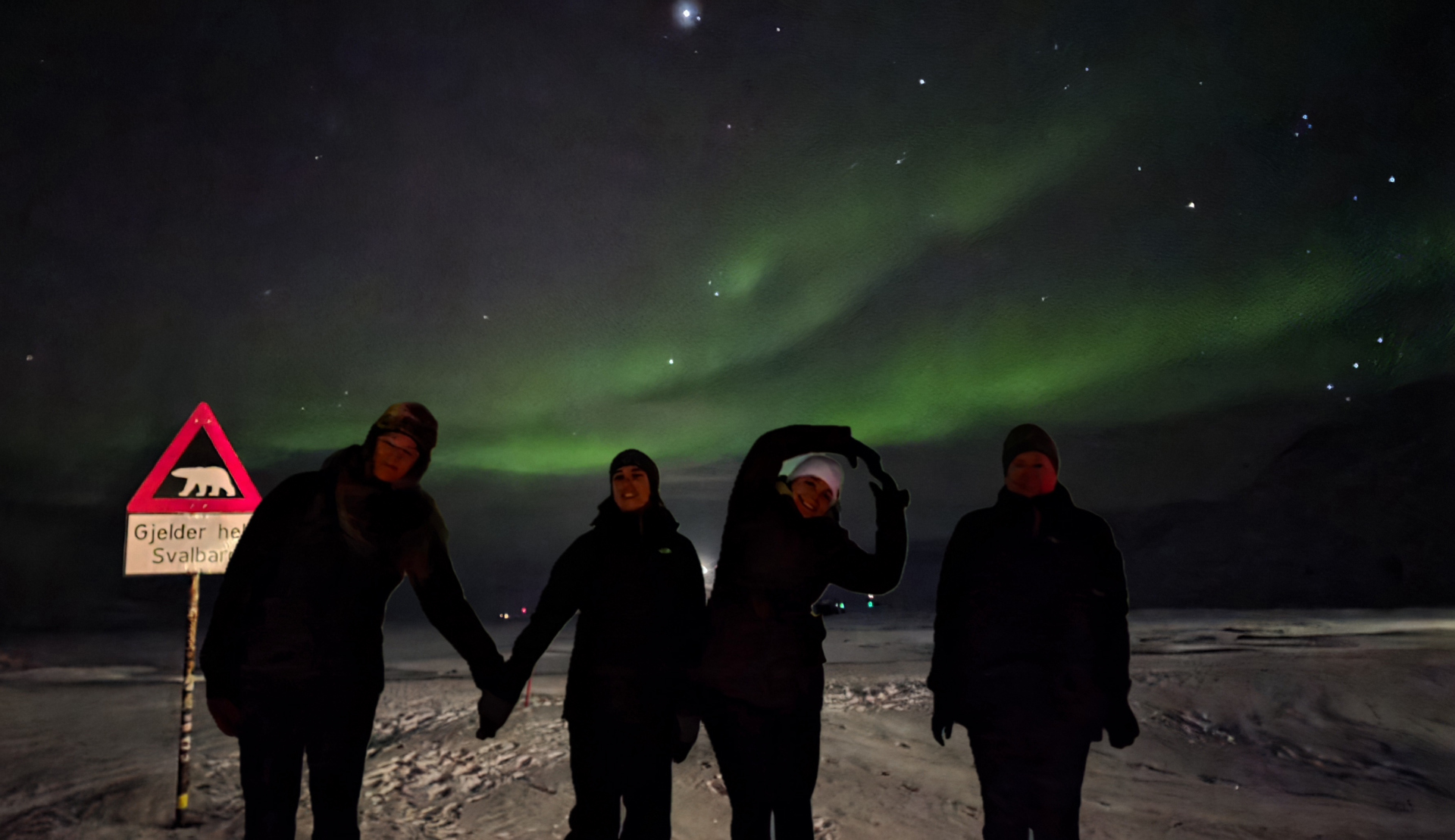
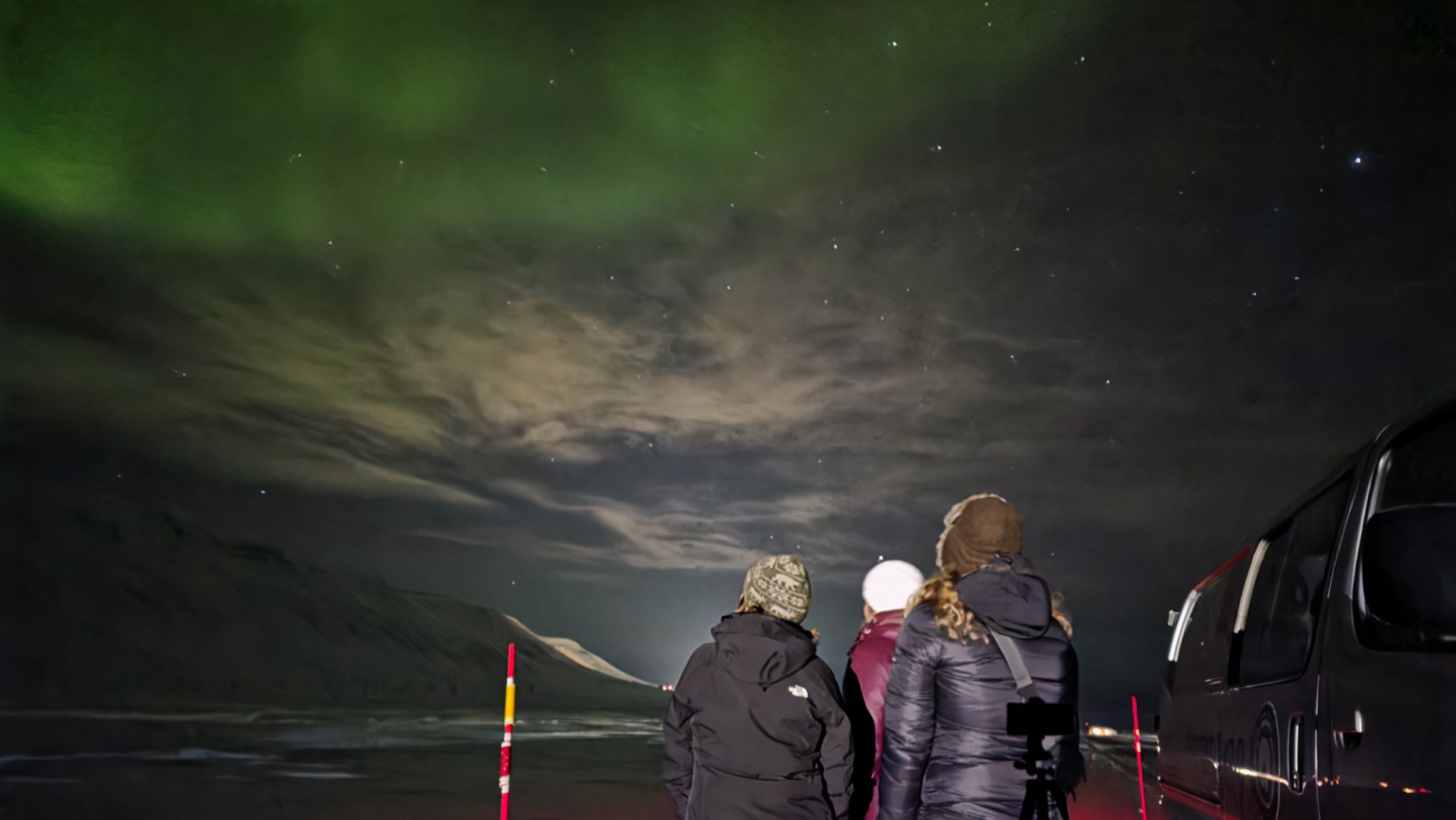
It is currently polar night on Spitsbergen. The only light comes from the moon – or from northern lights. These lights, also known as aurora borealis, occur when electrically charged particles from the sun collide with gas particles in the Earth's atmosphere. Depending on the type of gas, the sky glows green, purple or red. Some auroras are very calm, while others resemble fantastic fireworks. Our researchers were lucky enough to marvel at the northern lights several times during the first few days of the expedition. “The colourful lights keep shining. The whole sky is full of them: in front of us, above us, behind us – no matter where you look. It's really very impressive,” reports Knittel. “One day the lights danced across the sky, the next day they were rather calm. Sometimes in many colours and then again in a single color, turning the entire sky pink.”
Bacteria changing with the seasons
As great as the admiration for this natural phenomenon is, the focus of the trip is on research. Knittel and her team take samples from the seabed and seawater to study the bacteria living there. Among other things, they investigate the effects of the seasons and the associated changes in nutrient and particle input into the seabed. For years, researchers at our institute have been observing significant seasonal changes in bacteria in the water (bacterioplankton) in the German Bight off Heligoland in bacterial communities and their functions. Detecting such seasonal adaptations in bacteria on the seabed is much more difficult. Spitsbergen is located at 78 degrees north and, with three months of polar night in winter and round-the-clock daylight in summer, offers ideal conditions for investigating this question. In addition, an offshoot of the Gulf Stream and ongoing climate change keep the Isfjord ice-free all year round.
Biological filters
And why are we interested in this? Sandy coastal sediments are very important for global biogeochemical cycles. There, organic material originating from algal blooms in the ocean or from rivers is broken down very efficiently by bacteria. Thus, coastal sands act like large biological filters that clean the sea. Through mineralisation, biomass is broken down into nutrients throughout the year, which, together with sunlight, water and carbon dioxide, form the basis for photosynthesis. This closes the biogeochemical cycles and preserves the foundations of life.
Exciting prospects
Knittel and her team are planning a total of five expeditions to Spitsbergen in 2026. This will enable them to collect samples and data from all seasons.
We will continue to report on how the polar researchers are getting on!